
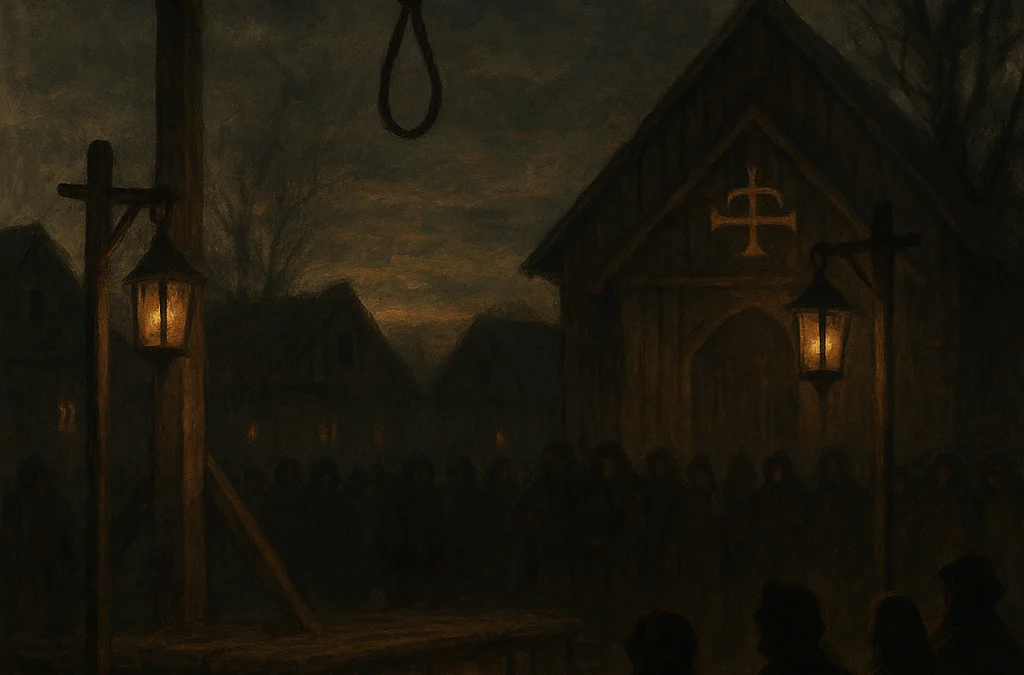
When we first step into The Killings at Rockman’s Ford, we aren’t greeted by the thundering armies or grand towers of the larger cities of Alderak. Instead, the story begins in a sleepy backwater town — a place where gossip is currency, superstition holds sway, and the sudden appearance of sorcery shakes the foundations of daily life.
This novella isn’t just a murder mystery. It’s a window into how ordinary people in Shundov understand magic, justice, and the divine.
The Gods in Daily Life
The villagers of Rockman’s Ford still remember the gods by name. Chaplains lead prayers to Devla for a bountiful harvest, invoke Neesa in rites of mercy, and call on Aastinor before acts of violence. These aren’t abstract theological discussions — they’re practical invocations tied to planting, childbirth, and judgment.
To the rural mind, the gods remain close and immediate. They explain the unexplainable and provide a vocabulary for both blessings and curses.
Superstition and the Stain of Sorcery
When a man is murdered by hostile magic, the town reacts with fear that feels older than either the Conclave or the Mage Tower in Lesmira. An old woman refuses to even step inside the victim’s cottage, warning that the curse could “rub off” on anyone who lingers too long.
This suspicion runs deep. In places like Rockman’s Ford, sorcery isn’t seen as a skill to be studied — it’s a stain that corrupts. Even innocent villagers who dabble in charms risk being branded as witches, their lives destroyed by fear and gossip.
The Law of Rope and Fire
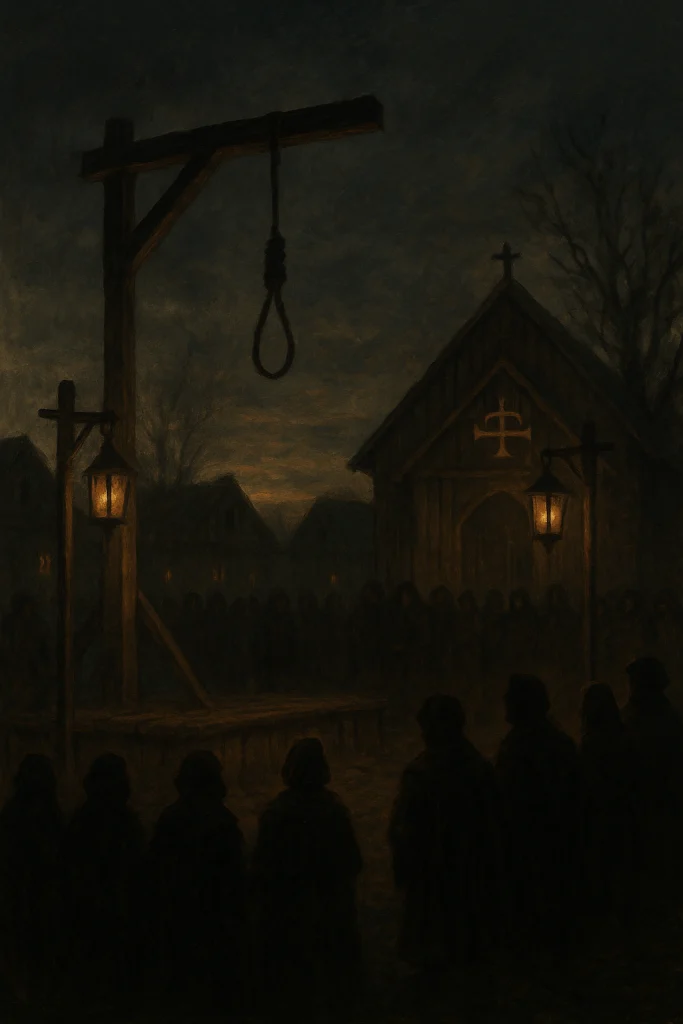
The Sheriff and Alderman invoke the kingdom’s laws on sorcery, which are inconsistent at best. The penalty might be exile for minor magic — or a rope and the gallows if blood has been spilled.
The chaplain’s words shape public opinion as much as the Sheriff’s edicts. To the villagers, the gods demand swift justice. What the Conclave or Mage Tower might think, or what evidence may exist, hardly matters when suspicion is enough to condemn.
The Conclave in Absentia
D’Jenn’s presence in Rockman’s Ford reminds us of the Conclave’s distant hand. Warlocks are feared and mistrusted even as they’re needed. To the villagers, D’Jenn is a foreigner wielding a power that should not be allowed to exist — yet without him, the truth behind the killings may never come to light.
Merrick, in contrast, takes a lighter approach. Lesmiran Scouts only hunt the Blessed to return them to the Mage Tower. Acts of justice, however convoluted, do not fall into their purview. Merrick prefers to remain hidden, to keep a gentle hand, and to lead with compassion.
The Conclave claims authority over magic, but in Rockman’s Ford, the people’s faith is still in the gods and the rope. The clash between these two systems — mystical authority and rural justice — is one of the central tensions of the story.
Why It Matters
The events at Rockman’s Ford may be small in scale compared to wars and empires, but they reveal something essential about the Sevenlands. Magic isn’t just power. It’s fear. It’s gossip. It’s a death sentence waiting to be carried out.
The novella shows us a culture where the gods remain in daily speech, where sorcery is whispered about like a sickness, and where a single accusation can end a life.
In that way, Rockman’s Ford isn’t just a setting — it’s the soul of the world, writ small.