In the world of The Seven Signs, the gods are never absent — but they are rarely present in the way we expect. Their names linger in curses, prayers, and ruins, even as their temples crumble and their followers dwindle. They are shadows in the background of the Sevenlands, half-remembered figures that still hold sway over superstition, politics, and fanaticism. In Alderak, they are more present, with many religious orders dedicated to various purposes all over the continent.
Everyday Invocations
In The Killings at Rockman’s Ford, villagers still whisper the gods’ names in fear and reverence. Devla is called upon to strengthen birthing mothers, Neesa in moments of tenderness, Aastinor and Bast when violence and judgment come to the fore. To the peasants, these names are not abstract theology — they are the vocabulary of life and death. When a sorcerer is suspected, the chaplain invokes the gods’ authority as swiftly as the Sheriff reaches for his rope.
These names endure because they are useful. The gods explain the unexplainable. They lend divine weight to justice, or to vengeance, depending on who is speaking.
Gods in Stone
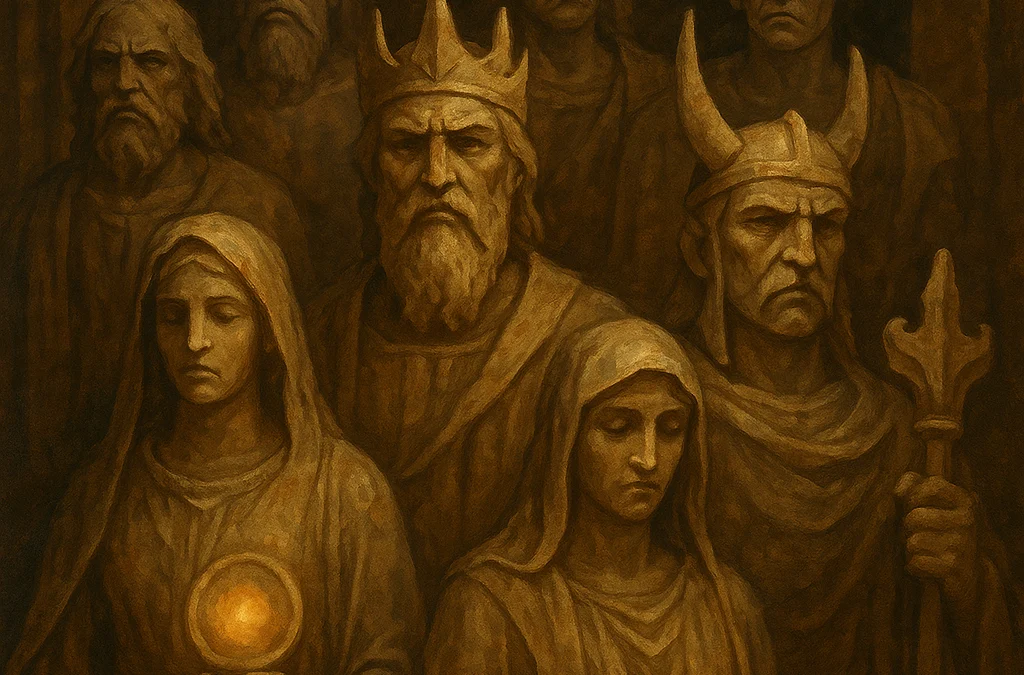
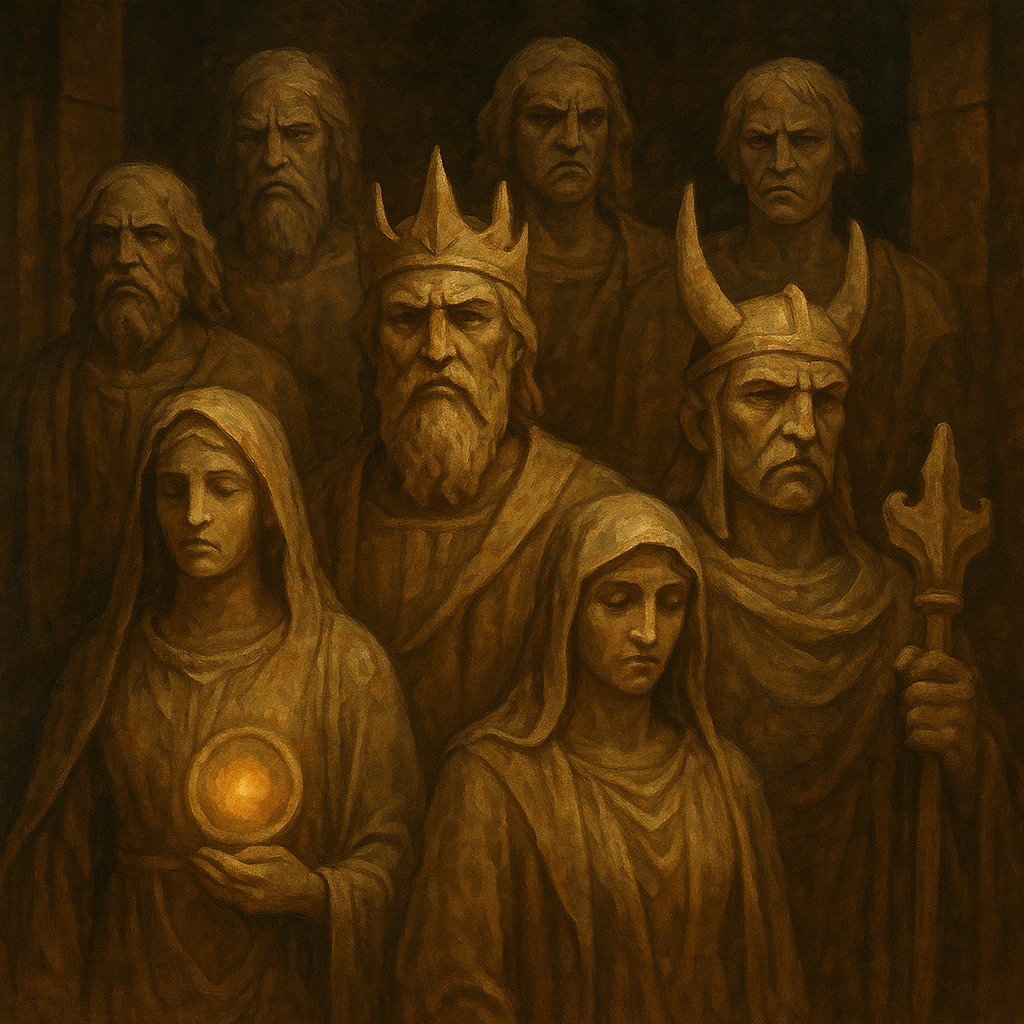
By The Old Man of the Temple, the gods take a harsher form. At Orm, statues of all eight loom over the ruins, their faces carved into scowls and frowns. Even Neesa, goddess of love, is depicted with severity. To stand in that hall is to be judged, as if the gods themselves had turned their faces from the world in disdain.
Here, the gods feel less like comforting figures of faith and more like monuments to something lost — the echo of a pantheon that once demanded sacrifice, perhaps, and left scars of resonance that still haunt the land.
Fanatics of the Clever One
In The Knife in the Dark, the gods return in the most dangerous way possible: through the Cult of Aeglar. Aeglar, the so-called Clever One, is worshipped not with hymns but with blood. His cultists believe that magic itself is heresy, a flaw that must be purged if the gods are ever to return. Their scripture, the Aeglari Codex, reads like a manifesto of madness. For them, every wizard slain is another step toward restoring the divine order.
The cult shows what happens when the silence of the gods becomes unbearable. Where peasants whisper and priests invoke, the cult acts. Their fanaticism is proof that the absence of gods can be as dangerous as their presence.
The Lord of the Underworld
Saarnok is remembered in whispers, a god whose name is less prayer than warning. Where Devla or Neesa are invoked for comfort, Saarnok is muttered in the same breath as blasphemy and madness. His worshippers are rare, but when they appear, they are the ones who peer too far into the darkness, scholars and outcasts who hunger for truths the Conclave dares not write down. To them, Saarnok is not a figure of benevolence but of revelation — the patron of forbidden knowledge, the one who strips away illusions no matter the cost. Those who claim his favor are marked by obsession and secrecy, gathering in hidden chambers to pore over texts that others would burn. To outsiders, they are heretics courting ruin. To themselves, they are visionaries, convinced that only through Saarnok’s shadow can the true shape of the world be seen.
A Broken Pantheon
Taken together, these glimpses reveal a fractured pantheon. The gods are not wholly gone, nor are they wholly worshipped. They exist in fragments: prayers, statues, cults, curses. Some see them as indifferent creatures, as Indalvian himself once did — powerful beings who view mortals as ants. Others cling to their names as shields against fear. And some, like the Aeglari, would kill to force them back into the world.
The gods of the Sevenlands are less a unified pantheon than a collection of echoes. Their power is real, even if their hands are no longer visible. In their silence, they have become what people need them to be: comfort, judgment, or excuse.
And perhaps that is their true danger.