
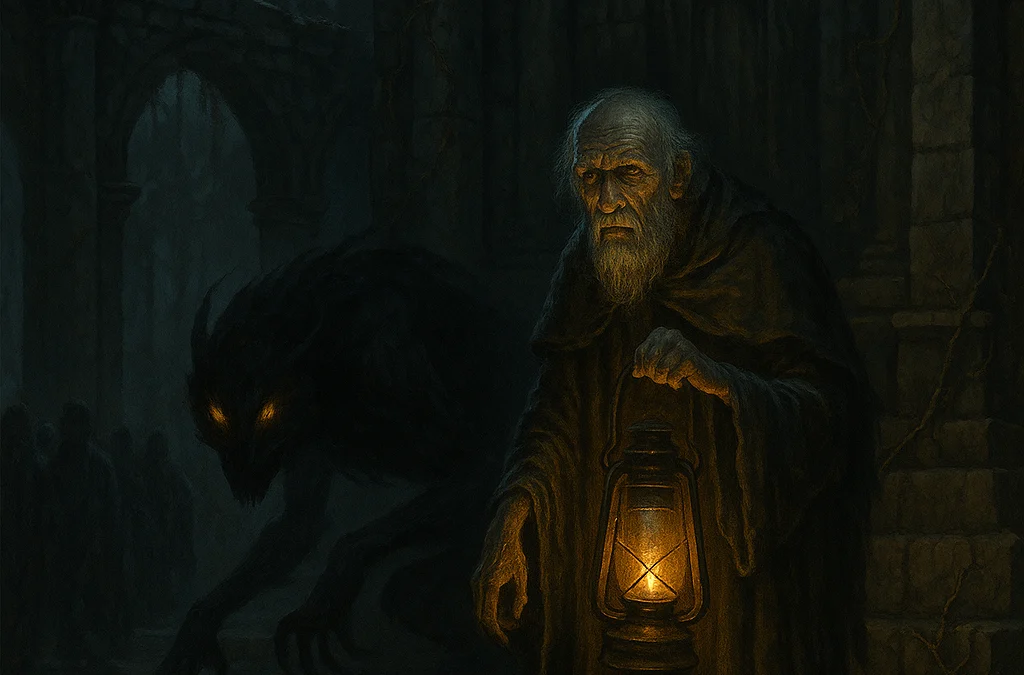
The ruins of Orm are more than crumbling stone and forgotten halls. They are haunted places, woven into the fabric of frontier superstition, where every whisper of the wind sounds like the echo of old prayers. For generations, people have told stories of the Old Man and the Lurker — two figures bound to the temple ruins, lingering in song, fable, and fear.
Children sing of them in half-remembered rhymes, voices carrying warnings older than memory. The Old Man is said to wander the temple as its Caretaker, a withered figure who tends to altars no longer used, watching over the stones with hollow eyes. He is the shadow of ritual, the remnant of devotion. Some say he is a priest who never left when Orm fell, cursed to keep vigil over the dead until time itself ends.
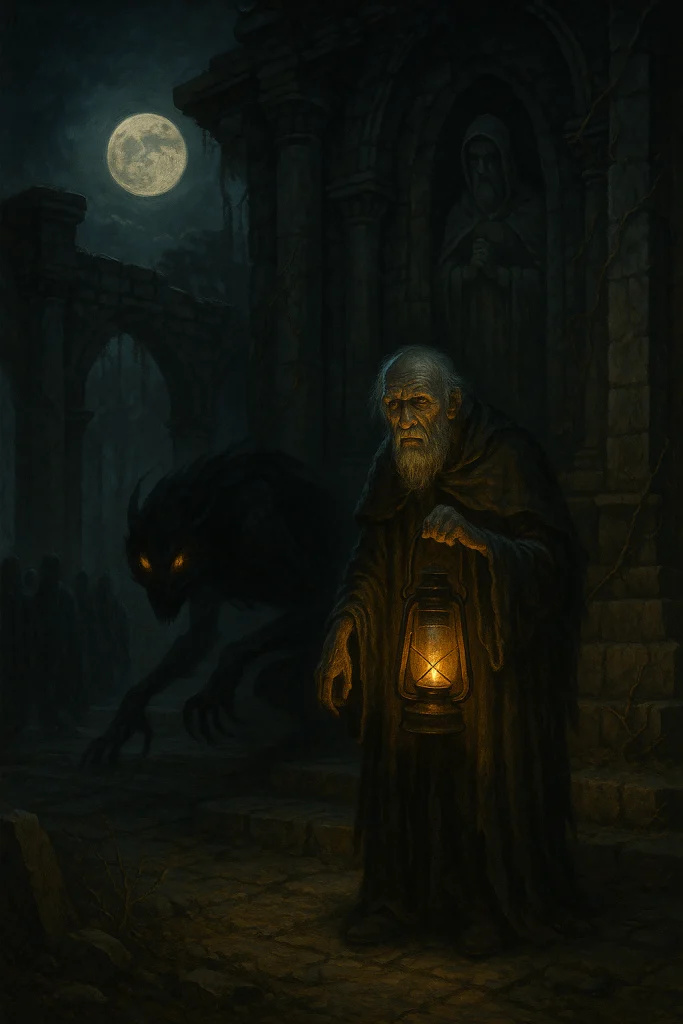
The Lurker, by contrast, is not caretaker but predator. A beast of shadow and hunger, it slithers through the temple’s halls, waiting for trespassers. Its name has become shorthand for things that hide in the dark — the nameless fears people can’t quite put into words. Parents use it to frighten children into obedience: “Stay away from the ruins, or the Lurker will find you.”
The Conclave dismisses both tales as rustic superstition. To scholars like Lacelle, the “curse” of Orm is explained not by creatures in the dark but by resonance — the echo of countless sacrifices and prayers, or perhaps the scar left by the Dannons’ massacre during the Second Great War. Power, after all, clings to places of death. But the rustic people on Orm’s fringes don’t need theories of resonance to know what they feel when they look upon the ruins. They feel watched.
And yet, the persistence of these stories reveals something important about the Sevenlands. In a world where the Conclave claims dominion over magic and the gods themselves have grown distant, it is folklore that fills the void. The Old Man and the Lurker endure not because scholars prove them true, but because fear makes them necessary.
Whether caretaker or predator, whether curse or resonance, the ruins of Orm remind us that memory is its own kind of haunting. Stones do not forget the prayers whispered over them, nor the blood spilled on their floors. And the people who live in their shadow cannot help but tell stories — because silence in such a place would be worse.